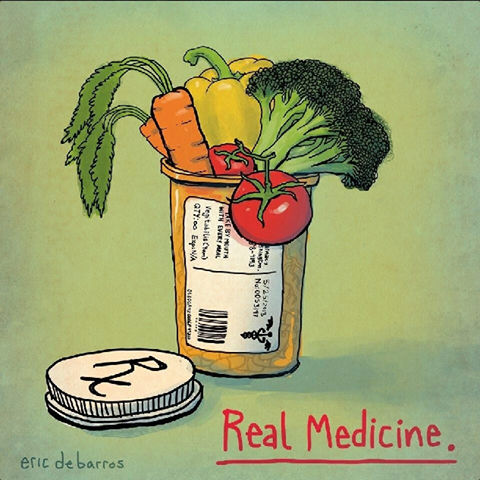
RX for health

RX for health

Friday, April 15, 2016

c. kimball

 It will likely take a year before your doc finds the right med for you and dose. Part of that is that you will be encouraged to make lifestyle changes that will be changing your blood sugars too.

You have to become healthier. That requires that you stop eating already made foods aka processed foods. It requires that you start eating real food that does not have a bunch of words in an ingredient list. It requires you move your body aka exercise.

It will take you up to 6 months to get your diet right. You start with one meal at a time.

As a person with diabetes you do NOT process carbs well because you no longer have enough insulin and you don't have enough storage and you aren't active enough to burn what little you do process.

You have a sick gut from years of processed foods with little to no fiber and 80% of people with diabetes have some form of Fatty Liver disease from eating too much Trans Fat.

Eat better
Exercise
Cut carbs
Increase fiber
Stop eating bad fat
Eat more good Omega 3 fats.
Stop eating anything fried from any type of restaurant

c. kimball

About 30% of people with diabetes do not tolerate gluten from wheat, barley, rye or oats. 70% of people will tolerate small amounts of things like steel cut oats, oat bran, or quinoa, or Ezekiel sprouted bread that does not use any flour. By small amounts I'm talking about 1/4 cup or one slice.

You have to test your blood sugar to see how you tolerate it. The things like " whole wheat" means nothing. Quick or instant oatmeal is just empty calories. You can look for double fiber breads that may or may not work for you. 2 servings of whole grains is max per day. A serving is one slice of whole grain bread or 1/4 to 1/2 cup of steel cut oats or oat bran or quinoa (which is really a seed but acts like a grain). Avoid corn unless you know it is organic. That includes chips and tortillas and corn on cob and corn bread. All cornbread or baking mixes are full of Trans fats and those will only serve to make you
More insulin resistant

C. Kimball


Start one meal at a time. Rome wasn't built in a day and you are not going to magically transform your diet overnight either.

You've been hearing for a long time to eat more vegetables and less beef. Eat more fish.

Diabetes means that you do not have the ability to store excess carbs nor do you have the insulin to be able to use carbohydrates in anything but tiny amounts. Your body just can't do it.

We have learned so much in the last 2 years about diabetes. We know that it is NOT just about your Beta Cells, but is also about the health of your gut and the health of your liver. So, the bottom line is that you have not eaten good nutritious food for a while and it is now important that you start thinking about what goes into your body. Empty calories are not something you can afford any more.

You must do some type of exercise, even if all you can do at first is 5 minutes a day until you build up to 1 hour a day.

Eat more nutritious food
Eat food that has a lot of fiber
Eat good lean protein from meat, bird, fish, pork, eggs
Eat whole dairy preferably organic to avoid antibiotics and bovine growth hormone
Enjoy Extra Virgin Olive Oil, Virgin unrefined Coconut Oil
Eat more nuts like walnuts, almonds, pecans, pistachios
Eat more avocados and berries

Avoid any food that has "hydrogenated" or "partially hydrogenated" in the ingredient list as this is one of the reasons your liver is sick
Avoid any food with "high fructose corn syrup", corn syrup, fructose, or corn syrup solids in the ingredient list
Avoid any food with MSG, monosodium glutamate in the ingredients
Avoid any food that has soybean, cottonseed, canola, safflower, sunflower, corn, or vegetable oil in it
Avoid Crisco
Avoid any food that has "enriched" anywhere
Avoid all foods that are fried at any type of restaurant.

If you do this, you will be eating so much better and you will start to heal your body and make your body less inflamed and more insulin sensitive.

Thursday, March 31, 2016

rhonda s.

Rhonda Sstand this. As type 2's we spent 10 to 15 years developing up our insulin resistance until we became diagnosed. Type 2's also have a heredity issue, but when and if that heredity kicks in, depends on your diet. As we eat certain carbs, our insulin resistance increases. Most type 2's make plenty of insulin in their own pancreas, but our cells become resistant and will not let the insulin do it's job. Insulin's job is to convey the sugars and starches, once broken down, to your cells to be used for your energy. Insulin is also our fat storage hormone. Every time we eat any carb, our pancreas will make more Insulin, through our Beta Cells. The body just keeps telling the pancreas to make more and more insulin, trying to clear the bloodstream of all the sugars. This happens over and over until our bloodstream is full and all this sugar makes us feel sluggish, destroys our nerve endings, causes inflammation in the whole body and more. When our blood sugars get high enough, doctors also order more Insulin in hopes of not overworking our Pancreas and hoping that massive doses of Insulin will finally push the sugar out of bloodstream and into cells. What also happens with all that massive amount of insulin is weight gain, because Insulin needs to desperately clear the bloodstream and finally does so by storing the sugar into fat cells. Remember it is also the fat storage hormone. If you eat very low carb, you will not have the pancreas being stimulated to push out insulin all the time. Your Pancreas will rest and not burn out all those valuable beta cells, that you have a lifetime limit of. You will not have the sugars building up in your bloodstream and also your insulin resistance will start going down and you will lose weight. Losing weight will be faster when you convert your whole body over to fat burning instead of carb burning. This is called Ketosis or a Ketogenic diet, once you get down to around 20 Net Carbs, and the body will use the fats you eat and the fats stored on your body, for all of it's body processes and energy needs. Carbohydrates are not essential to human body and is why we say only to get carbs found in non starchy fibrous veggies, because the fiber helps with digestion. Remember protein is essential, but more than the body can use, will get converted and burned just like sugar. Increasing fats will give you needed calories and fuel, once you stop eating carbs and will keep you satisfied and will get rid of the cravings. You must be very low carb to increase your fats. Low Carb, high fat is good, but carbs and fats together, are bad.. The whole goal to eating as a type 2 Diabetic is to understand what Insulin Resistance is. 

Wednesday, March 23, 2016

FATS AND CARBS DO NOT MIX WELL...Rhonda S.

Rhonda S. Hope everyone remembers that you must be on a very low carb strict diet to be drinking the bullet proof coffee and consuming lots of fats. Sure fats are filling without having carbs and will not usually raise blood sugars, and thats why we use them in a LCHF diet, but you must also be burning all those fats for your energy. If you eat carbohydrates and fat, it's a bad combination, as the fat will get stored while your body is burning the carbohydrates and you will gain weight. Your body will only burn all those fats when your carb levels get and stay low enough that your body switches from carb burning to a fat burning one. Usually to keep your body burning fats instead of carbs, you must be below 50 grams of carbs a day and preferably down around 20 per day.

Tuesday, March 22, 2016

NANCY K. PERSONAL RECOMMENDATIONS FOR DIABETICS

Nancy K.  personal recommendations for all, diabetic or not: 1. REsearch your disease(s). Not just from one source, but from many. No single research or body of literature is going to have all the information, or place the same emphasis on specific aspects. 2. Research all the medications you take. that means all the prescribed and over the counter medications. Again that means from reliable soruces such as webmd.com
or drugs.com.
 Both of the sites have consistently proven to give reliable information about supplements, prescribed medications, and over the counter medications. 3. Research any nutritional plan that you are on, or are considering. Look at the actual research done on it, looking for the most current available. Just realize that most research is about 5 years old before it is even published. 4. Look at alternative nutritional plans that fit within your lifestyle, your diseases, your medications that will promote you becoming healthier, reducing some of the medications you take, have a solid background of current research to support them, don't ask for money to learn the whole gamut of information about it. In some countries it can be challenging to maintain a specific nutritional plan due to economics, available foods, religious beliefs, etc. 5. Become your own personal expert on your body. By that I mean how you react to specific foods, medications, illness. 6. Begin to be more attentive to what your body is telling you. The subtle signs that your bs or blood pressure are too high or low, that your PCOS is beginning to flare up, that you may not be as hydrated as you should be, 6. Be willing to talk openly and empower yourself to tell your doctor or NP that you don't feel comfortable with not having all the knowledge and rationale for a medication, treatment, etc. and that until there is further discussion it goes no further. Just remember they are human, so doing so with aggression or a "bad attitude" will probably get you shut down and any relationship you have will be gone. This requires you use finesse, maturity, and a calm approach. Take your research articles with you, allow the doctor to have a copy to read so that they might be able to understand where you are coming from. A decent doctor is not threatened by having a well informed patient, but a poor one is.

Thursday, March 10, 2016

SUCCESS STORY BY BLANCA ROBLES-LEANOS

Another success story!!**
On 12/4/15, I was diagnosed with T2D. My A1C that day was 11.9. The world came crumbling down on me. I lived in a complete blackout for weeks. I never felt so depressed in my life. I had frequent panic attacks and felt like my spirit had left my body already. I felt I was walking around in my shell. During that time, concluded that I could either fight this or let it knock me out cold. Having two small boys, the latter wasn't even an option.... I geared up and decided to fight! Having that intention, I searched for a support group that could give me some hope. I searched on FB and this group was the first to come up and I immediately joined. I was encouraged to do LCHF. Honestly, I never heard of this woe before. I did my research and was convinced this would be my ammunition against diabetes. I immediately started LCHF woe and never, ever cheated. Not even once! I ate with my meter all day long. Testing myself 4-6 times per day.
Fast forward, three months later. Today I received my new A1C report from the bloodwork done on 3/7/16. My result is 5.0!!!!! WHAT!!!!!????!!!!! I immediately started crying. I can't believe it! I asked them to double check and make sure they are looking at MY results! They chuckled and said "they are YOUR results!". I made it to the 5% club everyone!!! I feel like I'm being born again!
I feel extremely blessed to have found this group and all the admins who have time and time again repeated themselves on LCHF. THANK YOU ALL SO MUCH! Thank you for sharing your wisdom! It goes a long way for some of us who listen and apply to the advice given! THANK YOU!!!
LCHF is without a doubt the way to go!

from type 2 diabetes support group global network