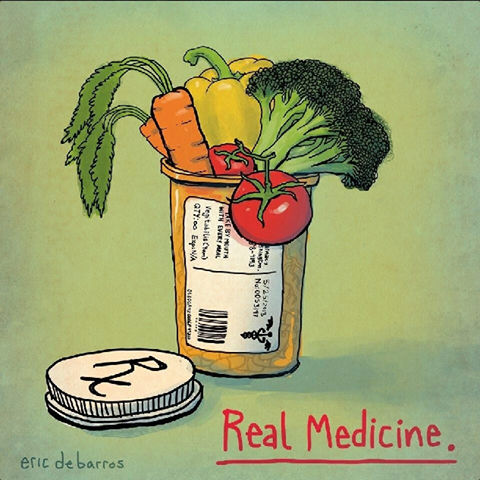
RX for health

RX for health

Thursday, May 19, 2016

HOW TO COUNT CARBOHYDRATES USING FOOD LABELS
This is a simple guide to counting carbohydrates. All diabetics should know how to do this, as it directly impacts your blood sugar.
...
First, take a look at the nutrition information label on any food product. The three main things to look at, for our purpose, is serving size, carbohydrates, and fiber. The number of carbohydrates are listed outright. Keep in mind that this is the number per serving, not for the entire package. This means if that can of green beans says 10 grams of carbohydrates, and there are 2 servings per can, then the entire can of beans has 20 grams of carbohydrates.
The next thing is the fiber. Fiber is listed because it slows down the body's absorption of carbohydrates, delaying them from being turned into sugar. Some fiber doesn't even get absorbed at all. It's important to note that the fiber count is already included in the total carb count on US labels. For those not in the US, you may need to add fiber back to the listed "total" to get the true total carbohydrate count.
There is another value listed under carbohydrates, called sugars. This number refers to the grams of added sugars used in the product. Sometimes it will also list sugar alcohols. Despite what you may have heard, sugar alcohols can still have a significant impact on our blood sugar as diabetics. This is why we don't blow them off. They are also included in the total carb count.

Wednesday, May 11, 2016

ADA and food giants

 Everyone, this woe is controversial with doctors, diabetic educators, and dieticians. The reason being they were given all their information by the ADA, which is supported by big pharmaceutical companies, and food industry giants such as Post and General Mills. If you look at my other post you will see much more recent research about how this is a very safe way of eating, even with the high fat intake. But the ADA refuses to acknowledge these facts. There are cancer centers, pediatric Type 1 centers, pediatric and adult neurological centers and clinics now using this way of eating for their clients. Carbohydrates have such an adverse effect on the human body it's incredible. T1D's for the first time are now having fewer highs and lows with this woe, getting caught up with their peers in their education, cancer cells are starved of their vital nutrient-carbs, neuro patients are having improvement in neurological function as well as fewer seizures on this woe. So as youself a few questions, do your own research. If you know that your diabetic team isn't going to be supportive then make a choice to just give less details about your woe or find a new team. This is your body, please get educated, and make decisions for yourself and don't just follow the advice of others blindly.

Wednesday, May 4, 2016

SUCCESS STORY


Elizabeth Pfiefer

For anyone new and questioning if a low carb way of eating will work for you, take a look: I am now fully insulin dependent, on a pump because of years of trying to eat ADA, taking sulfonylureas and ignoring my condition. Since finding Dr. Bernstein's plan and groups like this, and learning to test every food that goes in my mouth, this is a typical day. My neuropathy is reversing, my retinopathy has stopped progressing, my kidney function now tests normal, and my 3-year old foot ulcer has healed.
Diabetic for over 30 years, and my doctors are amazed that reversal of complications can occur - because they, like me, took for granted the idea that the progression of side effects and complications is simply what happens.
I am so blessed to have you guys on my side.

Sunday, April 24, 2016

CARBS ARE A NON-ESSENTIAL NUTRIENT

N. Kasparek Carbs are a non-essential nutrient. All the carbs your body needs can come from fibrous veggies grown above the ground. The additional carbs will keep your bs higher than a non-diabetic, increase the potential of cellular damage/death with bs over 120 mg/dl, and will slowly increase your insulin resistance. You may not notice the increases in your insulin resistance for months or years, but it's happening. Then at some point you will notice that your bs are rising, despite lowering your total carb intake even further, needing higher doses of meds and more meds to try and stabilize your bs. At that time your pancreas will begin to totally fail as well.

Monday, April 18, 2016

D. Price: success story

Hi, cooking friends, just checking in and giving an update. I was diagnosed in August of last year by a doctor who did not care (not even a pamphlet, just a script for a $350 meter - as if). Anyway, my blood glucose was 278 (I didn't even know what that meant) and my A1C was 8.0. I got online, did a LOT of research every single day, read Dr. Bernstein's book, became a meter fanatic, counted calories AND carbs keeping my carbs below 25 a day and my calories below 1500, logged ...every single bite on myfitnesspal.
And I chose to not listen to all the people who tried to tell me to do differently. I followed research. I took up tai chi. I became stubborn. I became selfish. I refused to eat the "healthy" pecan pie at Thanksgiving. Just because it has "organic" everything doesn't make it healthy for me! Geesh, it was like being attacked by rabid dogs.
Went to the doctor today. I have lost 62 pounds. My A1C is now 5.3 down from 8.0. My glucose is 99. Technically, I don't qualify as a diabetic now. My glucose and A1C are within normal range without medication. I'm not going to change what I'm doing, I'm going to keep going. I'm not worried about the people who say no one can "cure" diabetes, and I'm not worried about the people who say I need to eat more carbs. No, thank you. This is a one woman show. I make my choices. I choose my life. I read about 20 books. The one that made sense for me and WORKED was Dr. Bernstein "Type 2 Diabetes". I still test about 10 times a day, because I like seeing how things are working. It's become a fun challenge. I am now into sauces. Sauces make food taste good. I'm trying to learn to make hollandase (sp?) sauce. I need some help, because no luck so far. If anyone knows how, please let me know what I'm doing wrong. I've got asparagus and eggs, and I'd love to serve them with that sauce. smile emoticon I'm off to drink my water.

Friday, April 15, 2016

c. kimball


There are some that are so focused on eating as few carbs as possible that they think cookies like the post above this one are okay. They also think all fats are equal and pay no attention to the fats that contribute to high cholesterol and high triglycerides. High triglycerides have more to do with heart disease and an unhealthy liver.

If you focus on eating carbs with lots of fiber, you will be getting the right carbs. Limiting your daily total carbs to about 100 grams will give you the opportunity to consume the 30-50 grams of fiber you need for a healthy gut.

If you focus on getting rid of any food in your diet that has the following words in the ingredients you will be good. "Hydrogenated", "partially hydrogenated" "EDTA", "TBHQ", "soybean oil, cottonseed oil, safflower oil, sunflower oil, canola oil, corn oil, or vegetable oil. All of these oils are responsible for lipid problems.

You also must avoid these words in the ingredient list. "high Fructose Corn Syrup", "Corn Syrup Solids", "Fructose", "Corn syrup". About 30% of these sugars are converted to bad cholesterol and require 50-100% more insulin to process so they raise blood sugar a lot.

If you must use sugar be sure it is organic cane sugar or raw honey or pure maple syrup. No imitations.

Aspartame is harmful to the lining of your intestines. Splenda is not stable above 200 degrees like was thought. Stevia is the safest artificial sweetener but is really a herb.

Extra virgin olive oil and organic unrefined Virgin coconut oil. Nuts, seeds, avocados, flax.

Diabetes control ultimately comes from your gut and your liver. If you don't eat to get your gut and liver healthy, LCHF eventually makes diabetes worse.

Sheila Gales After being on LCHF for 6 months my A1C went from 11.0 

c. kimball

 It will likely take a year before your doc finds the right med for you and dose. Part of that is that you will be encouraged to make lifestyle changes that will be changing your blood sugars too.

You have to become healthier. That requires that you stop eating already made foods aka processed foods. It requires that you start eating real food that does not have a bunch of words in an ingredient list. It requires you move your body aka exercise.

It will take you up to 6 months to get your diet right. You start with one meal at a time.

As a person with diabetes you do NOT process carbs well because you no longer have enough insulin and you don't have enough storage and you aren't active enough to burn what little you do process.

You have a sick gut from years of processed foods with little to no fiber and 80% of people with diabetes have some form of Fatty Liver disease from eating too much Trans Fat.

Eat better
Exercise
Cut carbs
Increase fiber
Stop eating bad fat
Eat more good Omega 3 fats.
Stop eating anything fried from any type of restaurant